
Milk Waste Reduction in Cafés: How Caffeine Cut Waste by 40%, Unlocking New Revenue with Latte Art Factory
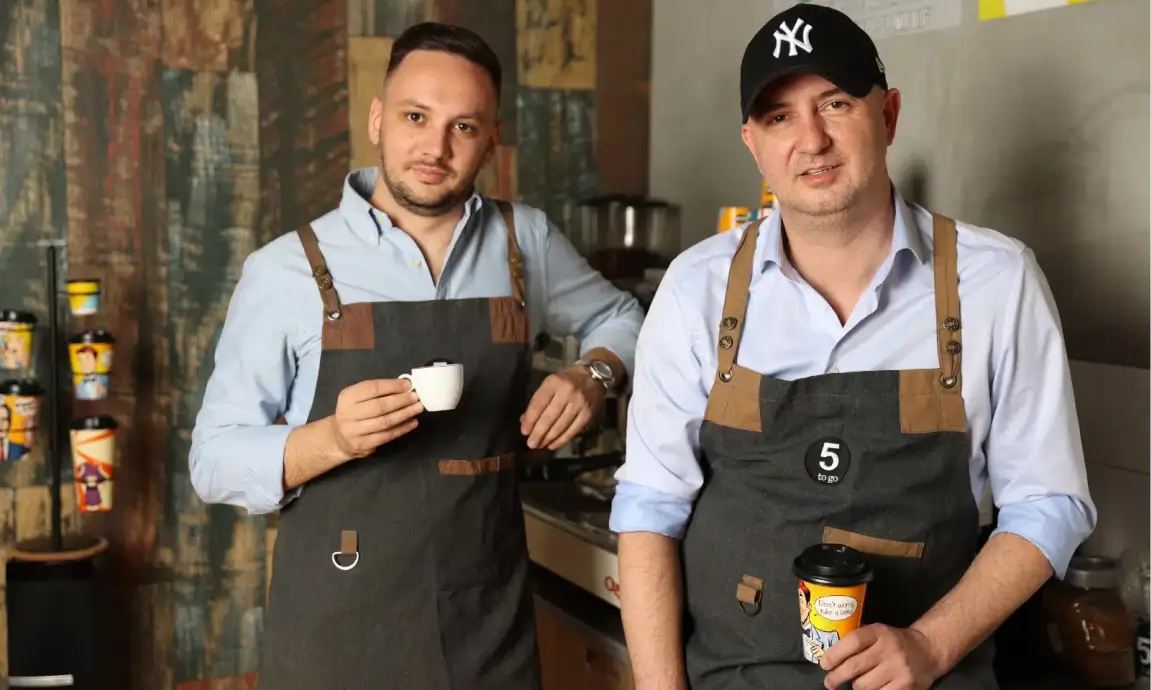
Caffeine is not your average coffeehouse chain. Operated by Reitan Convenience, one of Europe’s most recognized retail and hospitality groups, Caffeine has built a strong reputation as a go-to destination for quality coffee and a warm, authentic café experience. At their Riga outlet, that reputation is upheld cup after cup, an average of 180 cups per day, with 70% of all beverages being milk-based. That’s a lot riding on every pour.
For coffee businesses where milk-based beverages make up the majority of sales, milk waste reduction in cafés can have a significant impact on profitability.
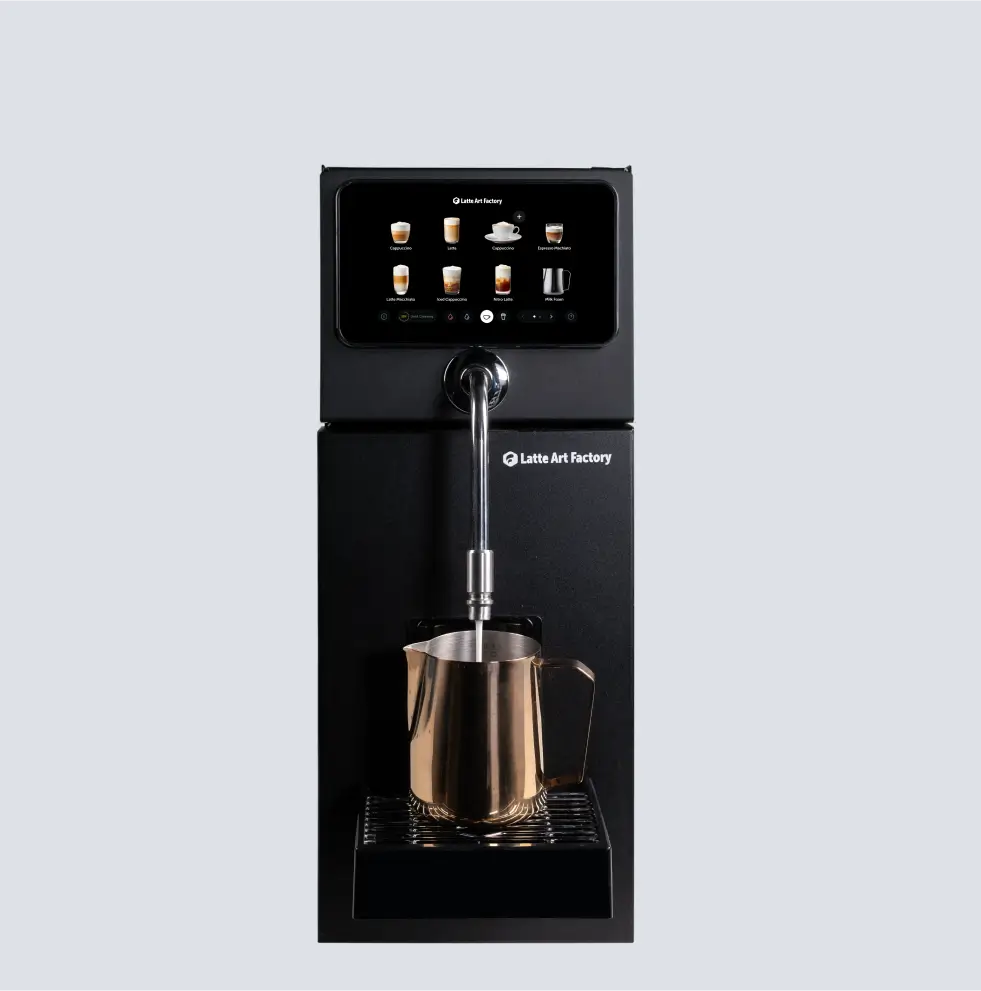
After nearly two years with Latte Art Factory‘s automated milk foam solution for both hot and cold beverages, the results speak for themselves.
The challenge: scaling milk-based drinks without scaling waste
When the majority of your drinks require precisely steamed milk, the stakes behind the bar are high. Before adopting LAF, Caffeine’s baristas were doing what any skilled team does: playing it safe. To avoid under-steaming, they would manually pour 100–150 ml more milk than each drink required into the pitcher which is a small precaution that made complete sense in the moment but quickly added up to a significant cost.
With 130–140 milk-based drinks served per day, that safety buffer translated to roughly 15–17 litres of steamed milk discarded daily*. Milk that was heated but never made it into a cup.
*Daily milk consumption was estimated at 42–43 litres.
As Karlis Zeps, Head of Coffee Quality at Reitan Convenience, puts, “Every single milk-based drink came with built-in waste.”
Something had to change.
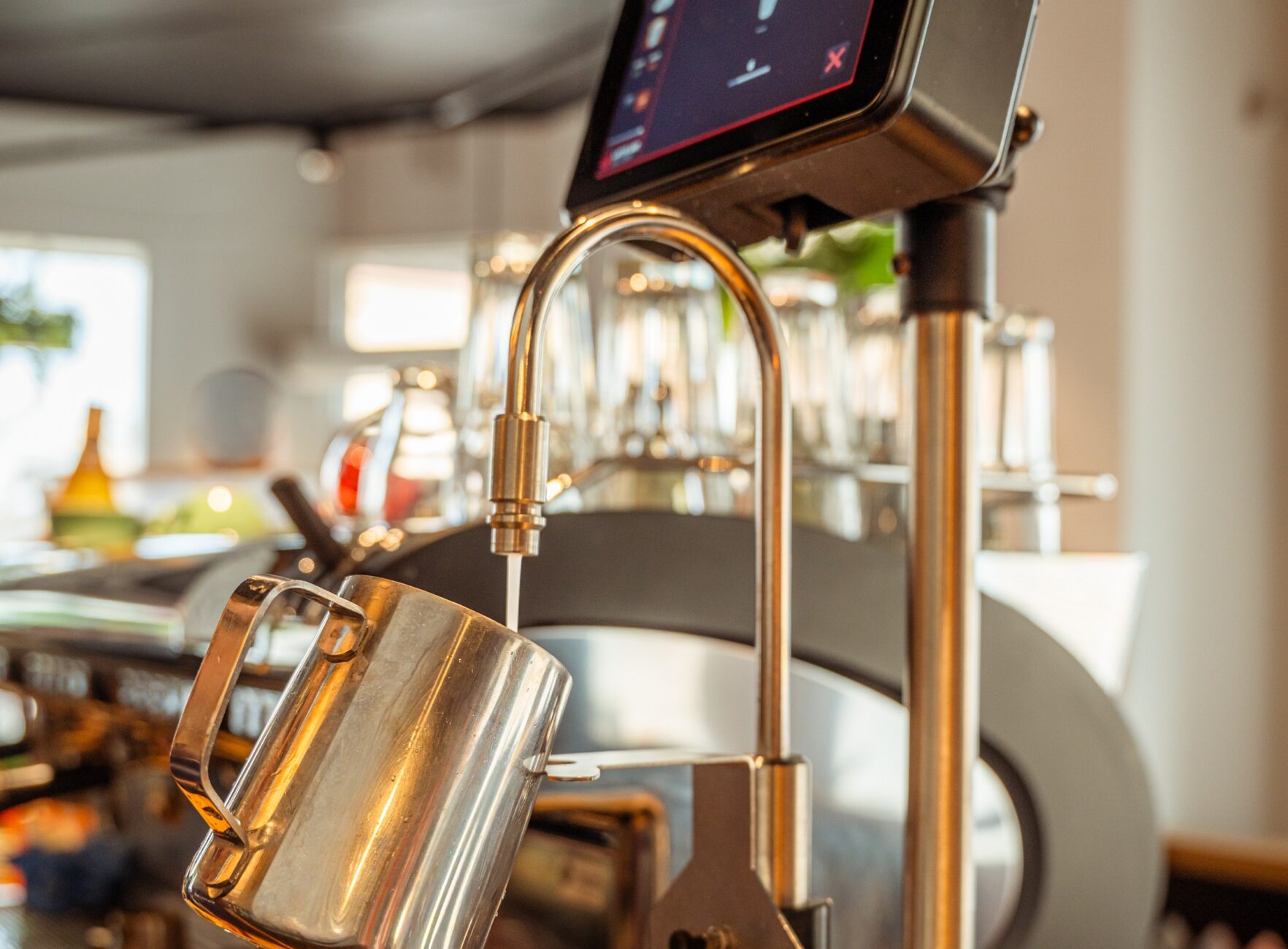
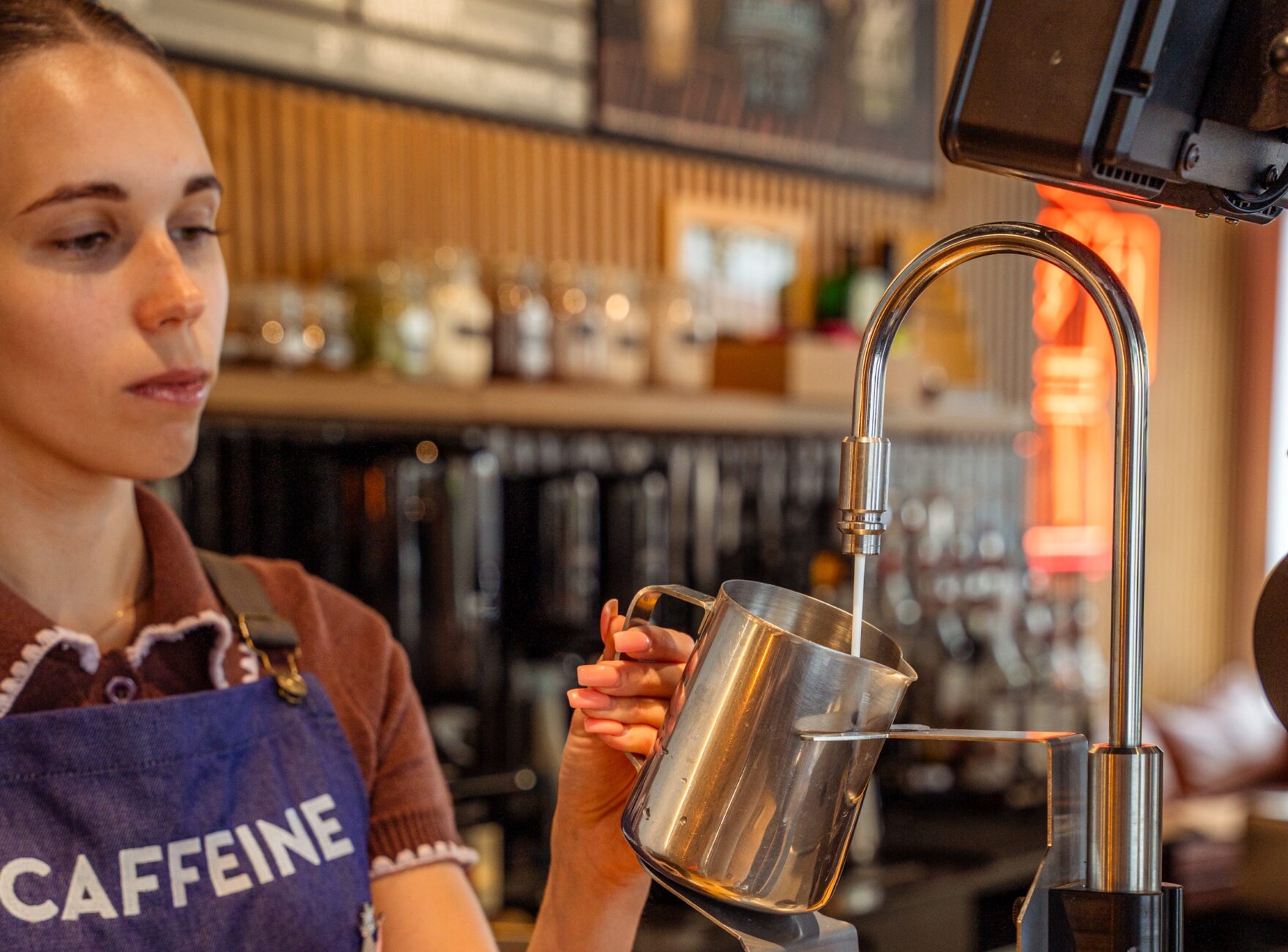
Latte Art Factory: the solution that transformed milk waste
Since installing LAF, Caffeine’s milk consumption has dropped from 42 to 26 litres per day.
“Since we installed LAF, our milk wastage has reduced by 40%,” Karlis confirms.
40% is a significant reduction and changes how milk moves through the operation. That figure alone tells a compelling story.
Over the course of a year, saving 16 litres of milk a day adds up to 5,800 litres, which translates to €5,800 saved annually at a single outlet. Now at chain scale, across just ten Caffeine locations, that figure reaches €58,000 annually, money that was previously poured down the drain with every over-poured pitcher. That’s the equivalent to a deposit on a new flagship store or a full equipment refresh across the network.
It all starts with a single machine, behind a single bar, doing one thing exceptionally well: using only the milk each drink actually needs.
For operators exploring milk waste reduction in cafés, Caffeine’s results illustrate how small daily savings can translate into meaningful annual impact.
Workflow optimization: freeing hands, freeing minds
Perhaps the change most celebrated by the team is what LAF gave back to their baristas: time.
“Baristas are pleased with LAF because they have more time to do more things behind the bar. Plus, training new staff is significantly faster because milk preparation is no longer the bottleneck skill,” Karlis Zeps shares.
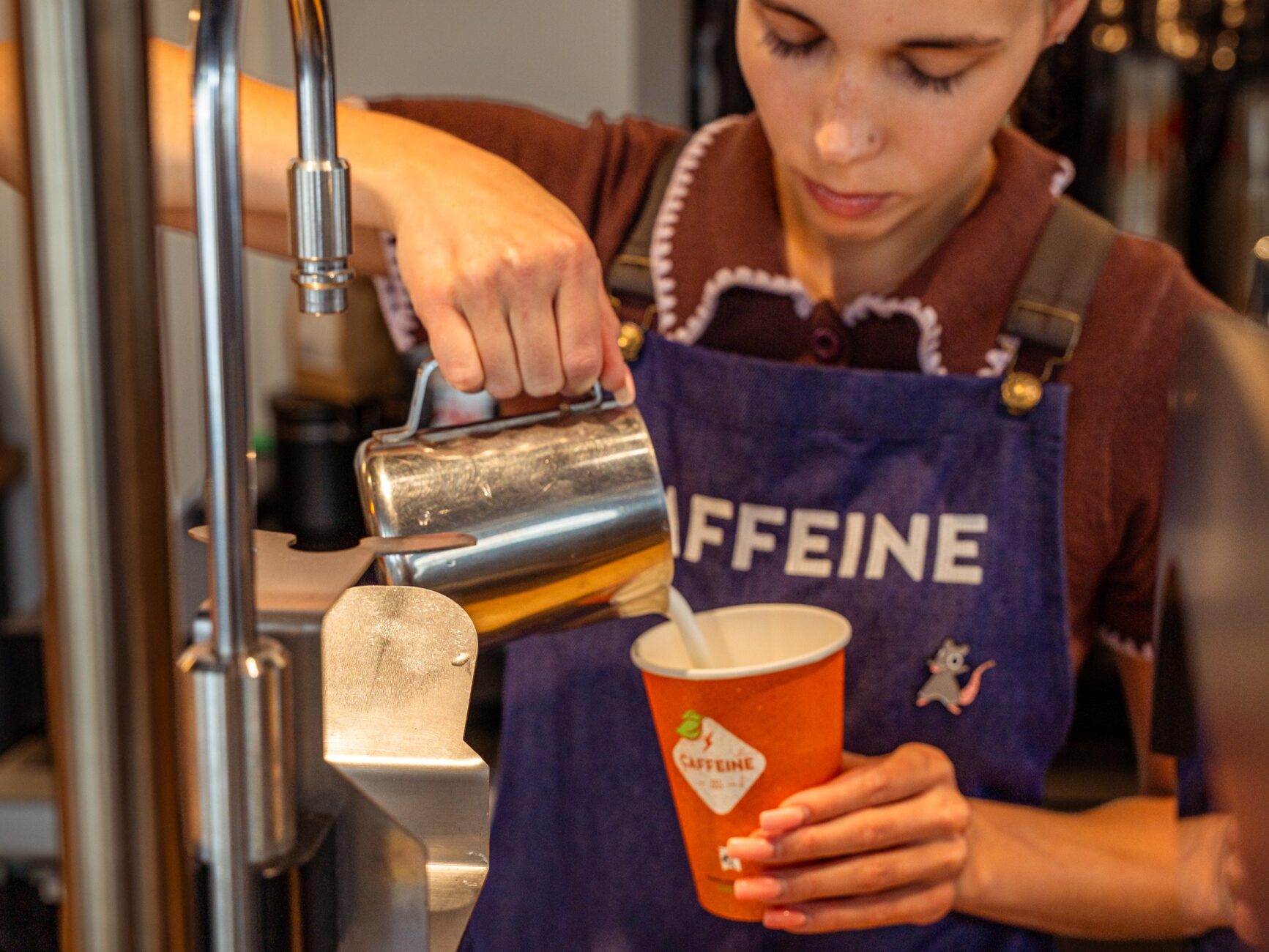
Before LAF, manual steaming required full attention and both hands. It was a task that anchored a barista in place. With LAF running milk preparation, the bar has fundamentally changed. Baristas can now pull espresso shots, handle the next order, and engage with customers. All while a milk-based drink is being prepared simultaneously.
During peak hours, where Caffeine handles up to 25 cups per hour, this parallel workflow is essential. Queues move faster. Customers wait less. And critically, baristas have time for the interactions that define the Caffeine brand experience: recommending drinks, engaging with customers, upselling.
Unlocking the menu customers now expect
Here’s where the LAF story gets particularly exciting for Caffeine. Before adopting the machine, nitro cold brew was not on their menu. They didn’t have the equipment, nor the workflow capacity, to introduce it consistently at scale.
LAF changed that entirely.
“LAF gives us many options to prepare hot and cold drinks and also serve nitro cold brew drinks. It is a must nowadays!!!” Karlis explicitly commented.
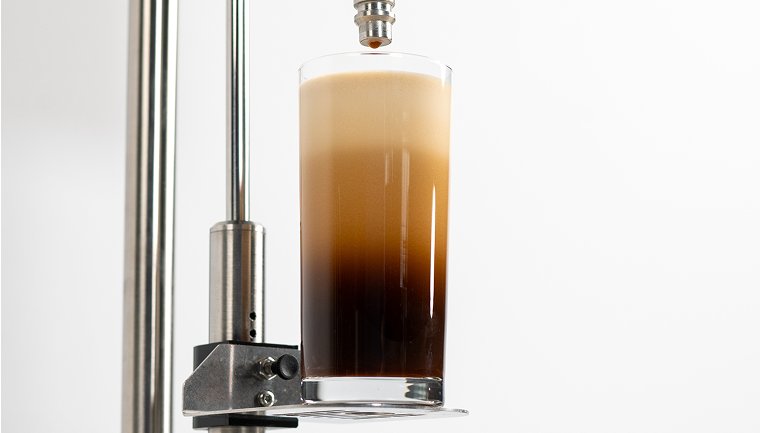
And they mean it. Nitro Cold Brew isn’t just a trendy addition, it’s one of the highest-margin drinks a café can put on its menu, typically commanding a price point 30–50% above a standard cold coffee. It attracts a younger, experience-driven customer base that didn’t previously have a reason to walk through the door. It generates the kind of visually striking, cascading pour that ends up on social media without any marketing spend. And it signals to every customer who sees it on the menu that Caffeine is a serious coffee destination, not just a convenient stop.
Nitro wasn’t something Caffeine unlocked incrementally. It’s a menu addition that LAF made possible from scratch. In today’s café landscape, where guests expect creative, modern beverage options, it brings clear value by driving new revenue streams, sharpening differentiation and showing how the right equipment can broaden what you’re able to offer.
What impressed Caffeine most?
Beyond the data and the workflow improvements, the Caffeine team points to something more fundamental: LAF is simply a pleasure to use.
The interface is intuitive. Programming is straightforward. Maintenance is effortless.
And in a high-volume environment where baristas are managing multiple things at once, that ease-of-use is a necessity.
“With its easy-to-use interface and super easy maintaining and programming, LAF has genuinely impressed us.”
The numbers at a glance
|
|
Before LAF |
After LAF |
|
Estimated daily milk consumption |
~42–43 litres |
26.01 litres |
|
Annual cost saving from milk waste (per outlet) |
– |
€5800 |
|
Daily milk discarded (waste) |
~15–17 litres |
Negligible |
|
Milk waste reduction |
– |
40% |
|
Nitro Cold Brew on menu |
No |
Yes |
|
Barista multitasking |
Limited |
Enabled |
A chain-level lesson from a single outlet
What Caffeine has demonstrated at their Riga location is a playbook that scales. Reduced waste, optimized workflows, expanded menu, consistent quality, lower labour friction. Together, these outcomes show how effective milk waste reduction in cafés can create value beyond simple cost savings. These are brand-level advantages, ready to be replicated across every Caffeine location that adopts LAF.
For a group the size of Reitan Convenience, operating across the Baltic region, the compounding impact of those gains across multiple sites is significant.
Are 16 litres of milk disappearing from your operation each day?
If so, it’s time to talk.
Discover Latte Art Factory and bring consistency, efficiency, and menu innovation to every cup.